


How to Wash Your Dog at Home
Bonjour !
Hello!
No products available yet
Stay tuned! More products will be shown here as they are added.
In short: to wash a dog at home, prepare the space and your equipment, check and detangle your dog, then wet, wash while massaging, rinse thoroughly and dry without rubbing. Done well, this moment respects their skin and becomes enjoyable for you both.
Do you love seeing your dog clean, with a shiny coat and a lovely smell? For their hygiene, health and well-being, a session with a professional groomer can be essential. Otherwise, a bath at home will be a special moment for them as well as for you. How many baths will your dog need? One bath a year, two baths or more? The number of baths depends on their size, breed and coat, but also on their activities: we explain it in detail on our page how often to wash your dog. From an early age, get them used to being cared for.
How do you prepare your dog for a bath?
Everything is prepared before you turn on the tap: the space, your equipment within reach and a dog that has been checked and detangled. These three steps prevent most sessions that go wrong.
1Bath, shower or basin: choosing the place
First of all, choose the place. The ideal spot is the bathroom, the most "waterproof" room in the house. If your companion is small, the washbasin or the sink may do. If your dog is medium-sized or large, the shower or the bath will be perfect, provided you use a non-slip mat or a towel so they do not slip. During the bath, your companion may panic and try to run off, so remember to close the bathroom door. If it is warm, why not bath them outside, but only if they enjoy being washed, otherwise they may escape. If you do not want to leave the bathroom soaked, wear old clothes or a waterproof apron!
2Choosing the shampoo and accessories
Everything should be within reach. You will need:
- a shampoo
- a detangler (if needed)
- a conditioner
- a brush
- scissors
- nail clippers
- an eye lotion
- an ear cleaning product
- towels
- treats
- a cup
The dog shampoo must suit your dog's pH: never use a shampoo made for humans, as it is too acidic. In shops, pet stores, pharmacies, at your vet's or directly from Ladybel, you will find a range of shampoos suited to the age, coat colour or specific needs of puppies, dogs, cats and pets. There are organic shampoos, shampoos with argan, mink or jojoba oil, and shampoos with cade oil for irritated or problem skin. If you have doubts about your dog's skin, ask your vet, who can help you choose your dog shampoo.
If you have run out, see what to wash your dog with when you have no shampoo, and what is best avoided.
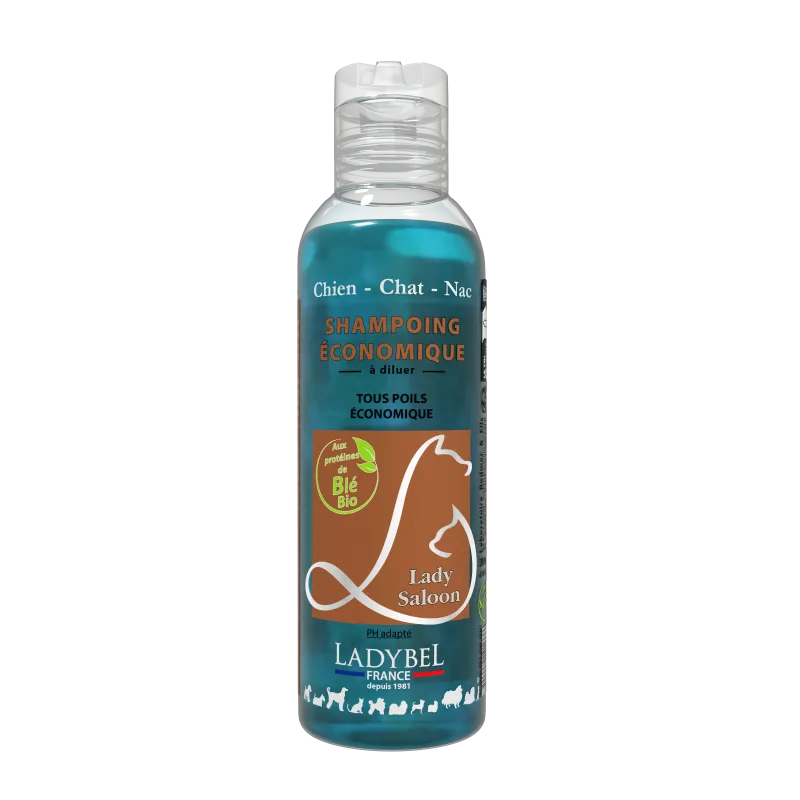
Highly concentrated and of professional quality, it suits all coat types. It is diluted before use: one bottle lasts a long time.
3Getting your dog ready for the bath
Now is the time to check your dog over. First remove their collar, then check the ears, eyes, mouth and nose. Next, the base of the ears and the neck, which are favourite spots for ticks, then the armpits and the base of the tail, which are prone to insect bites, parasites and irritation. Finish with the paws, which are exposed to cuts and grass seeds.
For dogs with long, thick or dense coats or with an undercoat, start by working out the knots, then brush and comb the coat. If the knots are far too large, do not hesitate to cut them out with a pair of scissors, taking care not to cut too close to the skin. A detangler and a suitable brush make this step gentler.
Before wetting your dog, trim their nails if needed. Do not cut too short, as you risk causing bleeding and infection. Place cotton wool in their ears without pushing it in, to stop water getting inside and causing ear infections.
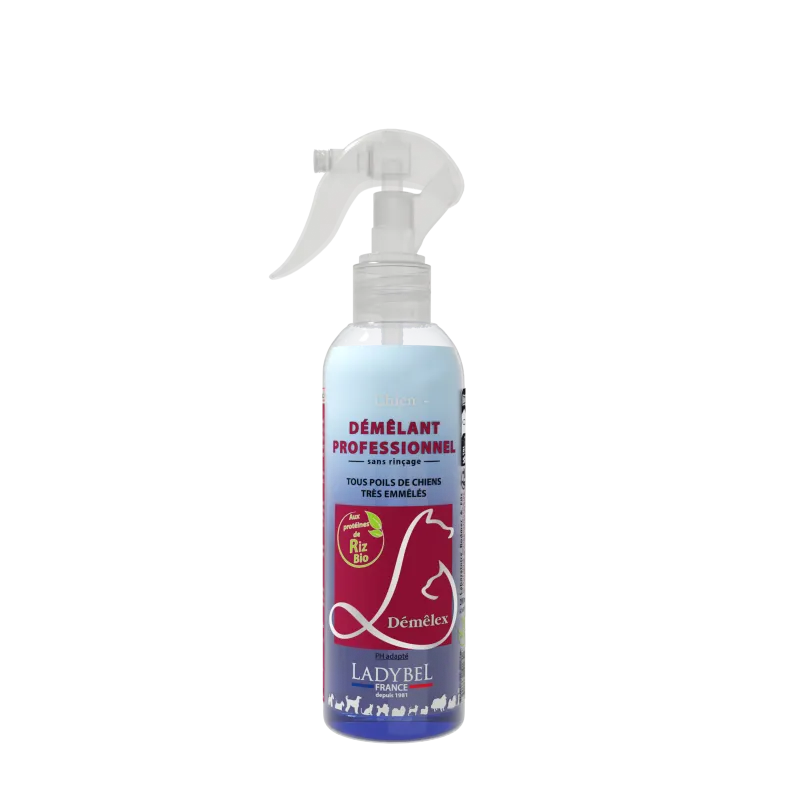
An instant, leave-in professional detangler for matted and difficult coats. Sprayed on before brushing, it lets the brush glide through without breaking the hair.
How to wash your dog: step by step
Washing a dog always follows the same order: wet, wash, rinse, dry, with calm movements.
4Check the water temperature
Dogs are sensitive to hot water. It should be neither too hot nor too cold, otherwise your dog may catch a chill. Wet your dog's whole body, head included, taking great care around the eyes.
5Apply the shampoo
Apply the diluted dog shampoo evenly, then massage it into the coat, starting at the neck and working down towards the hindquarters. Continue by washing the head, taking care to avoid the eyes, the inside of the ears, the nose and the mouth. Rinse, then shampoo a second time and leave it on for 3 minutes.
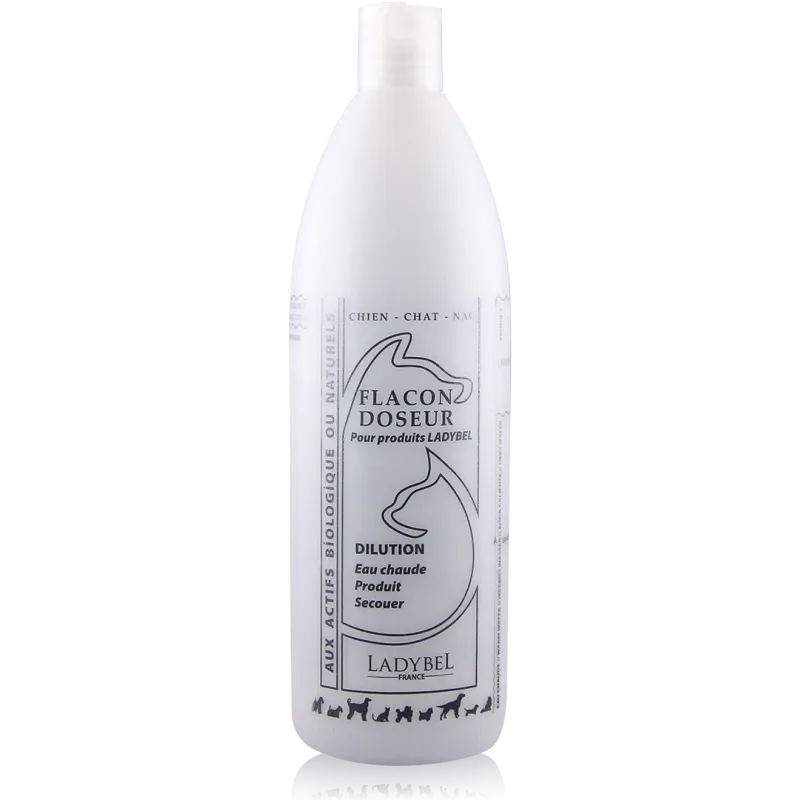
To dilute a concentrated shampoo at the right dose and apply it evenly over the whole coat.
6Rinse your dog
Rinse generously until the water runs clear. This can take a while if your companion has a thick coat or an undercoat.
For best results, finish with a suitable conditioner and leave it on for 3 minutes. The more moisturising effect you want, the less you should rinse out the conditioner. Simply squeeze out the excess water, then dry your dog.
7Dry your dog
Wrap your dog in an absorbent microfibre towel and pat them dry (without rubbing if your dog has long hair). Either way, they will shake themselves, so be ready to get wet! To finish drying, you can use a hairdryer while brushing, but watch the temperature.
After the bath, reward your dog with a treat: they will very quickly associate grooming sessions with a moment of shared closeness. These are the steps of basic grooming, which of course need adapting to your dog: simple grooming for a hardy short-haired dog, or full grooming with the help of premium Ladybel products for fine, delicate coats.
How do you get your dog used to baths?
The earlier you start, the more washing becomes a habit: a puppy used to water, massage and the towel from a young age will become a calm adult dog. Start with short sessions, praise them, offer treats and stop before they get restless. The aim is a positive experience, not a perfect session. For a very first wash, follow our guide how to wash your dog for the first time.
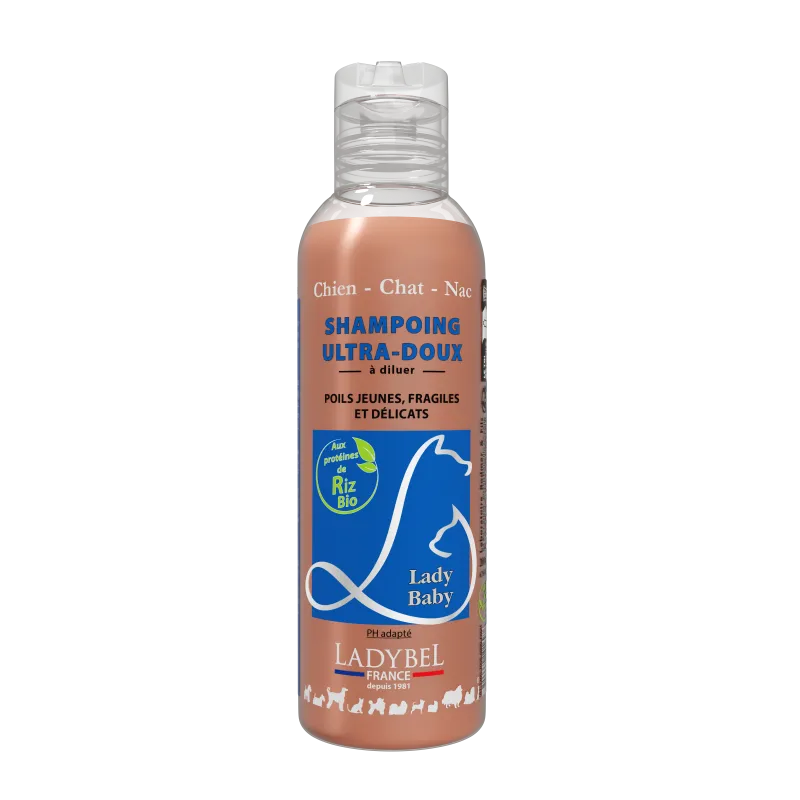
An ultra-gentle concentrated shampoo, designed for young and delicate animals: the right product to get a puppy used to bath time.
Precautions: when to seek advice
A dog that scratches after grooming, red skin, dandruff or a bad smell that quickly comes back are not a washing issue: talk to your vet about it.
How do you clean your dog's ears, eyes and teeth?
Cleaning the ears is a matter of hygiene and prevention that should be done regularly. If they are neglected, debris such as plant matter or earwax can build up. This debris encourages bacteria to develop, which can lead to infections or otitis. Some breeds need even more care, such as those with floppy ears, the Labrador for example. Use the Ladybel ear cleaning gel.
For the eyes, only clean them if there are discharges or crusts at the inner corner of the eye. For regular care, at the first signs of discharge, clean with the Ladybel veterinary-use cleansing lotion. It removes dust and impurities.
If your dog has bad breath, it may be due to dental plaque and tartar building up. The best prevention is regular care with an anti-plaque cleansing lotion or a dog toothpaste. Teeth should be brushed once a week.
See also:
Not sure which product to choose?
Tell us about your dog's coat, age and skin: we make these products, so we know which one suits them.